Equipment
Best Milk Frothers for Cold Foam
Frothers with cold settings compared by capacity and cleanup.
⏱ 8 min
READ Equipment →
Cold foam that drops straight into the glass comes down to foam texture, milk and drink temperature, and pouring order.
Part of our best milk frothers for cold foam guide. This troubleshooting guide was researched from published coffee and food-science sources; we did not test these fixes hands-on. For the base method, use the cold foam recipe.
Homemade cold foam sinks into iced coffee for three main reasons: the foam is too fine and runny to float (closer to steamed microfoam than true cold foam), the milk was not cold enough when frothed, or the cold foam waited and thinned before it reached the drink. Even well-made cold foam is not permanent; cold foam starts breaking down once it touches the iced coffee and blends in over several minutes.
| What you see | Likely cause | Fix |
|---|---|---|
| Cold foam drops straight through the iced coffee | Foam is thin, pourable microfoam | Froth longer until the foam is thick and spoonable |
| Cold foam separates into liquid milk before pouring | Milk started warm or foam sat too long | Use milk straight from the fridge; pour right away |
| Cold foam floats, then disappears in minutes | Normal breakdown on contact with liquid | Drink within about 5 to 10 minutes |
| Cold foam never gets thick | Milk type or frother not suited to cold frothing | Try a different milk; use a frother with a cold setting |
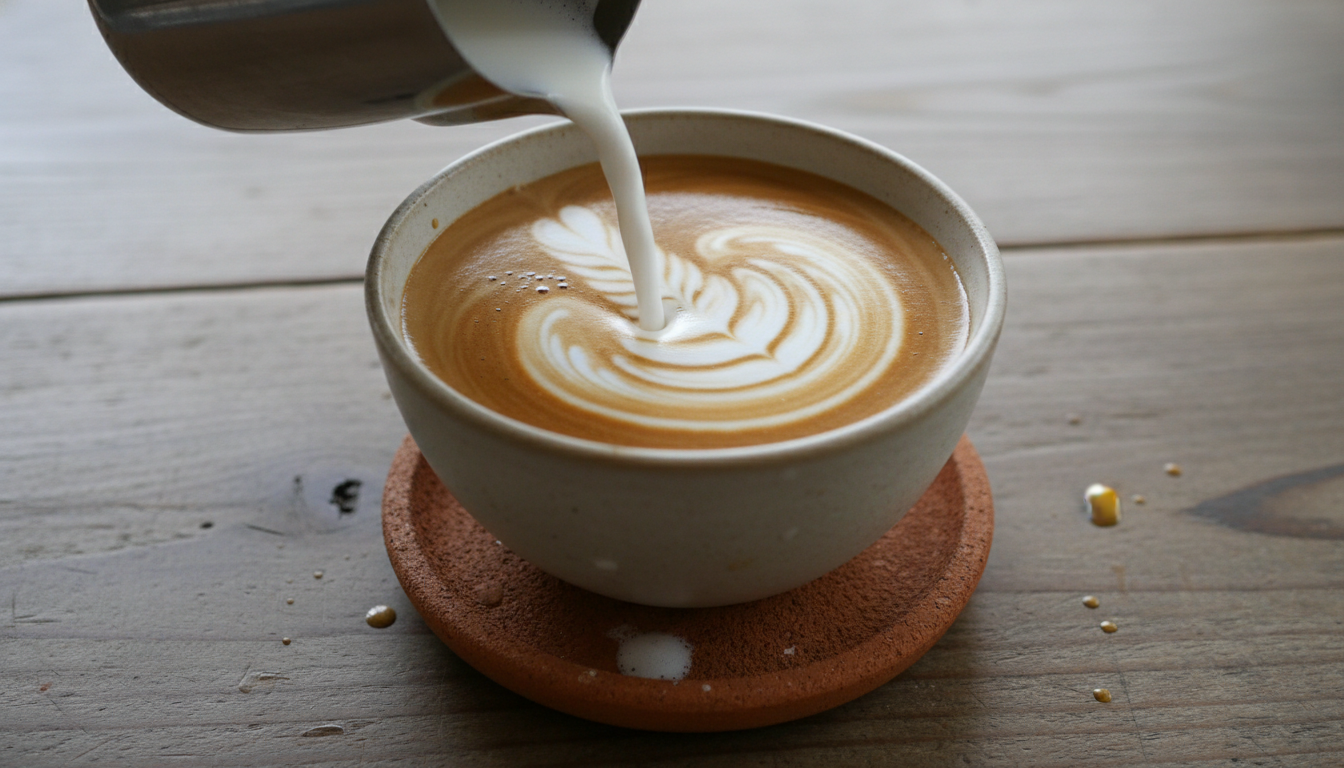
Foam texture decides whether milk foam floats on iced coffee. PureWow explains that steamed-milk microfoam sinks into a cold beverage much like regular milk would, while cold foam holds on top because vigorous cold frothing makes larger bubbles. Homemade cold foam that looks glossy and pourable, like latte-art milk, behaves like microfoam and sinks. Cold foam meant for an iced drink should be thicker and stiffer than latte milk. If hot foam turns thin and bubbly for other reasons, see fixing thin, bubbly foam.
Milk composition changes how long cold foam survives on iced coffee. Food-science writer Harold McGee, quoted by Sprudge, says skim milk is enriched in the whey proteins that stabilise foams and largely free of the milk fats that destabilise them. PureWow likewise calls nonfat milk the milk of choice for heat-free frothing.
Not every source agrees. The ODIFORGO cold foam guide prefers 2% or whole milk and says nonfat makes lighter, less stable foam, and reports that almond and soy milk foam up but deflate faster. If whole-milk cold foam keeps sinking, a lower-fat milk is the first swap to try; oat-specific problems are covered in why oat milk foam collapses.
Milk temperature is the easiest cold foam variable to fix. The ODIFORGO guide says to froth milk straight from the refrigerator, kept at about 35 to 38 °F, because warm milk will not hold its structure in cold drinks. Milk researcher Thomas Huppertz, quoted by Sprudge, notes that milk foamed at lower temperature destabilises into larger bubbles, which is why cold foam is a short-lived topping rather than a permanent layer. Keeping the iced coffee itself well chilled, with ice already in the glass, gives the cold foam a cold surface to sit on.
For full iced drink builds, see how to make an iced latte and the iced cappuccino foam technique.
Homemade cold foam usually sinks because the foam is too thin or fine-textured to float, the milk was not cold enough, or the foam sat before pouring. Steamed microfoam in particular sinks into cold drinks much like plain milk does.
Cold foam begins breaking down as soon as it touches liquid, so it slowly blends into iced coffee over a few minutes. Published guidance suggests drinking a cold foam drink within about 5 to 10 minutes.
Sources disagree. Food writer Harold McGee notes skim milk is rich in the whey proteins that stabilise foam and low in the fat that destabilises it, while some barista guides prefer 2% or whole milk for texture. Try both with your frother.
Steamed milk microfoam is a poor choice for iced drinks because its fine bubbles sink into a cold beverage like regular milk, losing the layered look.
Reviewed September 28, 2026.
Frothers with cold settings compared by capacity and cleanup.
The base method for homemade cold foam.
Build an iced latte at home, then top it with cold foam.