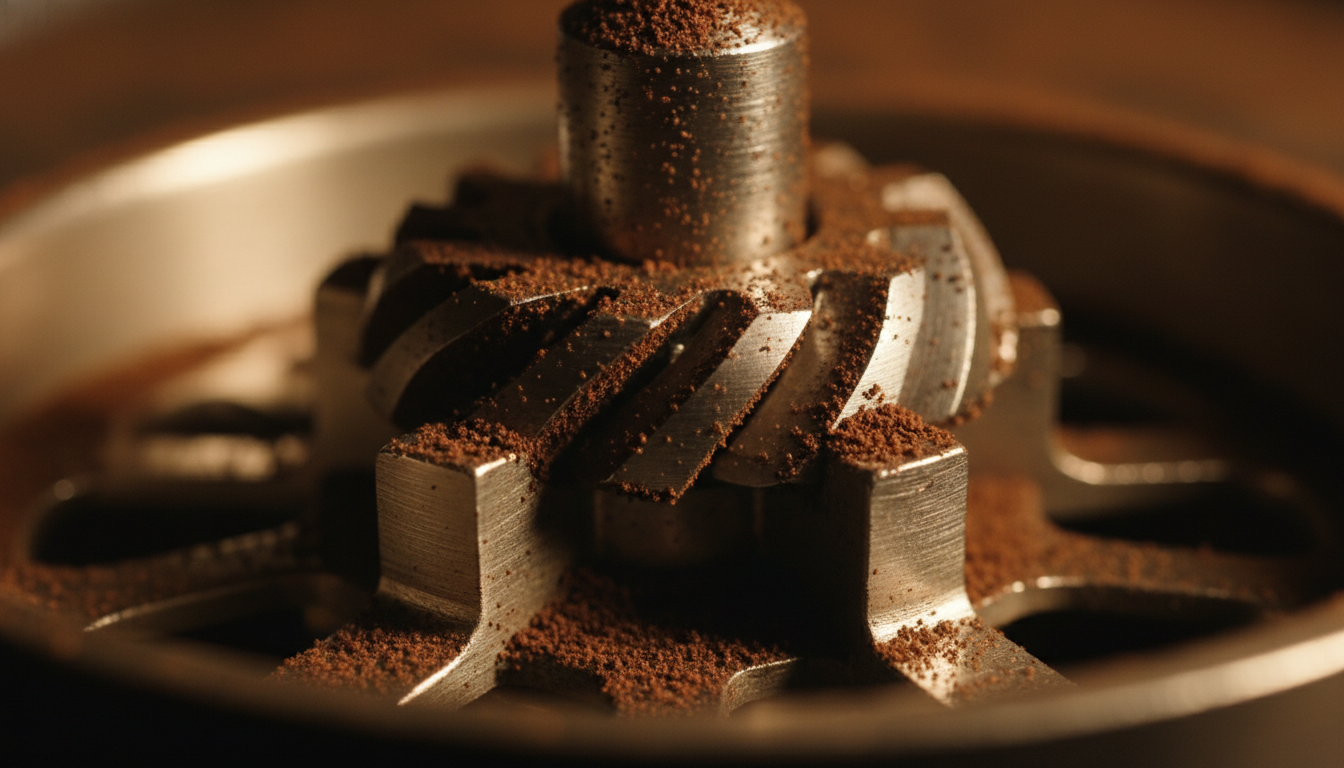
Dialing In
Dial In Light Roast Espresso
Master high-temperature, extended-ratio techniques for bright, complex light roast extractions.
Master high-temperature, extended-ratio techniques for bright, complex light roast extractions.
Minimum Brew Temperature
Extended Brew Ratio
Target Extraction Time
Clicks Finer vs Medium
Light roast coffee beans retain higher density and moisture content compared to darker roasts. The shorter roasting time preserves cellular structure, creating compact bean matrices that resist water penetration. Light roast espresso beans require modified extraction parameters to solubilize compounds trapped within dense cell walls.
The dialing in process for light roast espresso prioritizes three variables: higher brewing temperatures (205-208°F), finer grind settings, and extended brew ratios (1:2.5 to 1:3). These modifications compensate for reduced solubility while preserving the bright acidity and complex flavor notes characteristic of lightly roasted coffees.
✓ Light Roast Characteristics:
Comparison of extraction variables showing modifications required for optimal light roast espresso.
| Parameter | Standard Espresso | Light Roast | Reasoning |
|---|---|---|---|
| Dose | 18-20g | 19-21g | Increased density requires more mass |
| Yield | 36-40g (1:2) | 45-54g (1:2.5 to 1:3) | Extended ratio extracts more compounds |
| Temperature | 200°F (93°C) | 205-208°F (96-98°C) | Higher heat solubilizes dense cells |
| Grind Setting | Medium-fine | Fine to medium-fine | Increases resistance and contact time |
| Extraction Time | 25-30 seconds | 30-40 seconds | Slower extraction develops sweetness |
| Pressure | 9 bars | 9 bars (or lower pre-infusion) | Standard pressure with longer pre-infusion |
Systematic approach to calibrating light roast espresso from baseline to optimal extraction.
Goal: Establish baseline resistance
Goal: Activate compound solubility
Goal: Saturate dense coffee puck
Goal: Test extended extraction
Goal: Calibrate to target flavor
Goal: Optimize sweetness and clarity
Diagnostic table for addressing common flavor issues in light roast espresso extractions.
| Taste Profile | Root Cause | Corrective Action | Frequency |
|---|---|---|---|
| Sharp, citric sourness | Under-extraction | Grind 1-2 clicks finer OR extend to 1:3 ratio | Common |
| Grassy, vegetal notes | Insufficient development | Increase temperature 2-3°F OR extend time 5s | Common |
| Thin, tea-like body | Yield too high | Reduce to 1:2.5 ratio OR increase dose 0.5g | Moderate |
| Harsh, astringent finish | Over-extraction | Coarsen 1 click OR reduce temperature 2°F | Moderate |
| Lacking sweetness | Ratio too tight | Extend to 1:2.75 or 1:3 ratio | Common |
Specific equipment capabilities needed for successful light roast espresso extraction.
PID temperature control enables precise 205-208°F brewing temperatures. Machines without PID controllers may struggle to maintain consistent high temperatures throughout extraction, resulting in temperature drop-off that compounds under-extraction issues.
Recommendation: Dual boiler or heat exchanger machines with PID provide optimal temperature stability. Single boiler machines require temperature surfing techniques to achieve adequate brewing temperatures.
Light roast dialing requires fine grind adjustment range with consistent particle distribution. Espresso grind size for light roast approaches the finest settings on many grinders.
Recommendation: Stepless grinders (Eureka Mignon, Niche Zero) provide infinite adjustment between steps. Stepped grinders need sufficient range in the espresso zone to accommodate light roast fineness requirements.
Extended pre-infusion (8-12 seconds) saturates dense light roast puck before full pressure application. This reduces channeling risk and promotes even extraction through compact coffee beds.
Recommendation: Machines with programmable pre-infusion (Breville, Profitec, Rocket) simplify light roast preparation. Manual lever machines or flow control modifications provide pre-infusion alternatives.
Turbo shots use coarser grinding with reduced pressure (6 bars) and extended time. This technique extracts light roasts with exceptional clarity while minimizing harshness. Pressure profiling enables flavor modulation impossible with standard 9-bar extractions.
Some advanced machines allow temperature adjustment during extraction. Starting at 208°F and declining to 202°F prevents over-extraction of delicate compounds while maximizing initial solubility of light roast beans.
Increasing dose to 20-21g provides additional coffee mass for water to extract from. Combined with extended ratios, higher doses compensate for reduced solubility without requiring extreme grind fineness that risks channeling.
Refractometer measurement provides objective extraction data. Light roast espresso typically targets 19-21% extraction yield (EY) compared to 18-20% for medium roasts. TDS measurement removes guesswork from dialing in.
Reference: Espresso extraction science for comprehensive chemistry analysis.
Apply these high-temperature, extended-ratio techniques for bright, complex espresso extractions.
Master Dialing In