Espresso Grind for Conical Burr Grinder: Settings
Conical burr grinders produce a bimodal particle distribution that creates rich body and traditional espresso characteristics. This guide provides conical burr grind settings, grinder-specific recommendations, and consistency tips for optimal espresso extraction.
Conical Burr Grind Characteristics
Understanding Conical Burr Grinding
Particle Distribution
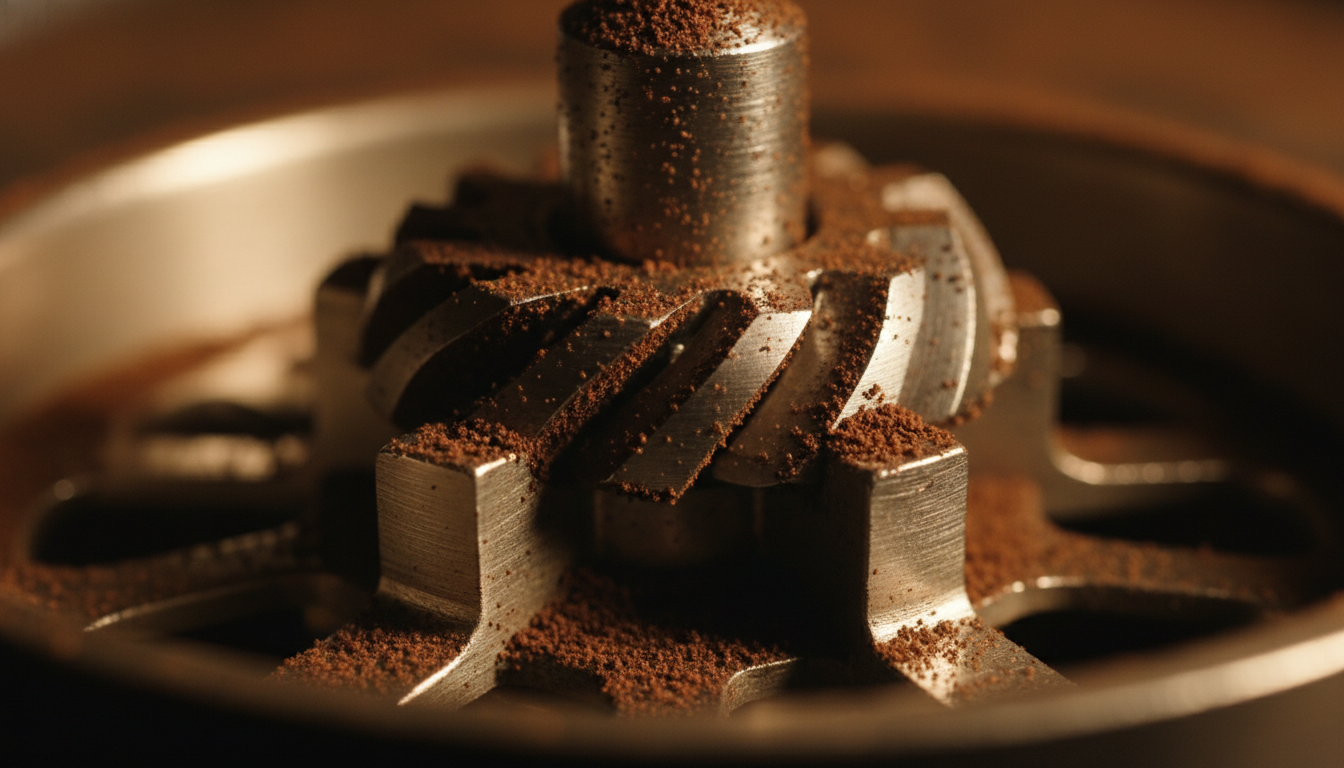
Conical burrs grind coffee between a cone-shaped inner burr and outer ring burr. The geometry produces bimodal distribution with two distinct particle peaks. A higher proportion of fines creates body and enhances crema formation. This distribution suits traditional Italian espresso profiles.
Extraction Dynamics
The fines in conical burr grinds extract faster than larger particles. Fines create flow resistance for proper extraction timing. Larger particles provide the main flavor extraction body. The combination produces full-bodied, rich espresso with thick crema.
Heat and Retention
Conical burrs generate less heat than flat burrs due to shorter grinding path. Lower heat preserves volatile aromatic compounds. Conical designs typically have lower grind retention. These characteristics suit high-volume home use and busy cafés.
Flavor Profile
Conical burrs emphasize body, mouthfeel, and traditional espresso characteristics. The increased fines contribute to syrupy texture and persistent crema. Flavor notes blend together more than with flat burrs. Many prefer conical burrs for milk-based drinks and dark roasts.
Conical Burr Grind Settings
Espresso Starting Points
| Grind Setting | Approximate Microns | Use Case | Flow Characteristic |
|---|---|---|---|
| Extra Fine | 180-220 μm | Very light roasts, high altitude | Very slow, thick |
| Fine | 220-280 μm | Standard espresso, medium roasts | Honey, viscous |
| Medium-Fine | 280-340 μm | Blends, medium-dark roasts | Steady, syrupy |
| Medium | 340-400 μm | Dark roasts, oily beans | Moderate, rich |
| Coarse | 400+ μm | Pressurized baskets only | Fast, thin |
Adjustment Factors
- Bean density: Harder beans (light roasts) require finer settings
- Oil content: Oily beans extract faster; use coarser settings
- Humidity: High humidity may require slightly finer adjustment
- Age: Fresher beans need coarser grinds than stale beans
- Altitude: High-altitude beans are denser; grind finer
Grinder-Specific Guides
Popular Conical Burr Grinders
Baratza Encore/Virtuoso
Espresso range: 4-10 on the dial (coarser end of espresso-capable)
Starting point: 6-8 for medium roasts
Notes: Entry-level grinders with stepped adjustments. Limited fine-tuning for espresso—best for pressurized baskets or entry-level machines. Consider upgrade for unpressurized portafilters.
Baratza Vario
Espresso range: 2F to 6F (macro 2-6, micro A-F)
Starting point: Macro 4, Micro C
Notes: Ceramic burrs produce consistent espresso grinds. Dual-cam adjustment allows micro-steps. Excellent value for dedicated espresso grinding. Consider steel burr upgrade for pour-over flexibility.
Rancilio Rocky
Espresso range: 5-15 on the dial
Starting point: 8-10 for medium roasts
Notes: Doseless and doser models available. Stepless version preferred for espresso. Commercial-grade build quality. May require burr seasoning for optimal performance.
Breville Smart Grinder Pro
Espresso range: 5-15 on the dial (lower numbers are finer)
Starting point: 8-10 for medium roasts
Notes: Digital timer and adjustable upper burr. Wide range suits espresso through French press. Consistent for the price point. Consider upper burr adjustment for fine-tuning.
1Zpresso J-Max / JX-Pro (Hand Grinders)
Espresso range: 1.5.0 to 2.5.0 (clicks from zero)
Starting point: 2.0.0 for medium roasts
Notes: External adjustment rings allow quick changes. Excellent grind quality for hand grinders. Fine steps suit espresso precisely. Fast grinding for manual operation.
Commandante C40 (Hand Grinder)
Espresso range: 6-12 clicks from closed
Starting point: 8-10 clicks for medium roasts
Notes: Nitro Blade burrs produce exceptional consistency. Red clix axle provides finer adjustments. Premium hand grinder for espresso enthusiasts. Requires more effort than electric alternatives.
Consistency Tips
Achieving Repeatable Results
Grind Adjustment Best Practices
- Purge between changes: Clear 2-3g of old grind size
- Adjust incrementally: One step or micro-adjustment at a time
- Document settings: Record grind numbers for each bean
- Consider bean rest: Adjust for beans 1-3 weeks post-roast
- Check burr condition: Worn burrs require different settings
Dose Consistency
Weigh every dose for precision. Conical burr fines benefit from consistent dosing. Use a dosing funnel to minimize spillage. RDT (Ross Droplet Technique) reduces static and clumping. Consistent dose creates consistent extraction resistance.
Environmental Considerations
- Humidity: High humidity causes clumping; use RDT
- Temperature: Cold beans grind differently than room temperature
- Storage: Store grinder in consistent environment
- Cleanliness: Remove oils regularly to prevent rancidity
Maintenance Schedule
- Daily: Brush out residual grounds
- Weekly: Clean burr chamber with brush
- Monthly: Deep clean with grinder cleaning pellets
- Annually: Inspect burr condition and alignment
- As needed: Replace burrs when performance degrades
Dialing Workflow
- Start with recommended setting for your grinder
- Pull test shot and record time and taste
- Adjust one step finer if too fast/sour
- Adjust one step coarser if too slow/bitter
- Repeat until extraction falls within 25-30 seconds
- Fine-tune by taste rather than time alone
Troubleshooting Conical Burr Issues
Problem: Inconsistent Grind
- Clean burrs thoroughly
- Check for foreign objects
- Verify burr alignment
- Replace worn burrs
Problem: Static Clumping
- Apply RDT before grinding
- Wait 30 seconds after grinding
- Use anti-static brush
- Check humidity levels
Problem: Can't Grind Fine Enough
- Check upper burr adjustment
- Verify burr condition
- Consider burr shim if applicable
- May need grinder upgrade
Problem: Slow Grinding Speed
- Clean burrs of buildup
- Check motor condition
- Verify power supply
- Don't overload hopper
Related Guides
Espresso Grind for Flat Burr Grinder
Compare flat burr characteristics and settings.
Quick Espresso Dialing In Guide
Fast method for dialing in with conical burrs.
Espresso Dialing In Troubleshooting
Fix extraction issues across all grinder types.
Machine-Specific Dialing In Guide
Brand-specific tips for popular espresso machines.
Over-Extraction Flavor Profile
Identify when grind requires coarsening.
Under-Extraction Flavor Profile
Recognize when grind requires fining.
Key Takeaways
- → Conical burrs create body: Higher fines content produces rich, full-bodied espresso with thick crema.
- → Grinder-specific settings matter: Start with recommended ranges for your specific grinder model.
- → Purge after adjustments: Clear residual grounds before testing new settings.
- → Use RDT for consistency: Water spray eliminates static and improves distribution of conical burr grinds.
- → Maintain regularly: Clean burrs monthly and inspect annually for optimal performance.