Espresso Grind for Flat Burr Grinder: Settings
Flat burr grinders produce uniform particle distribution ideal for espresso. This guide provides flat burr grind settings tables, specific grinder recommendations, and adjustment tips that maximize flat burr performance for consistent espresso extraction.
Particle distribution
Micron range (espresso)
Adjustment clicks
Typical retention
Flat Burr Grind Characteristics
Understanding Flat Burr Grinding
Particle Uniformity
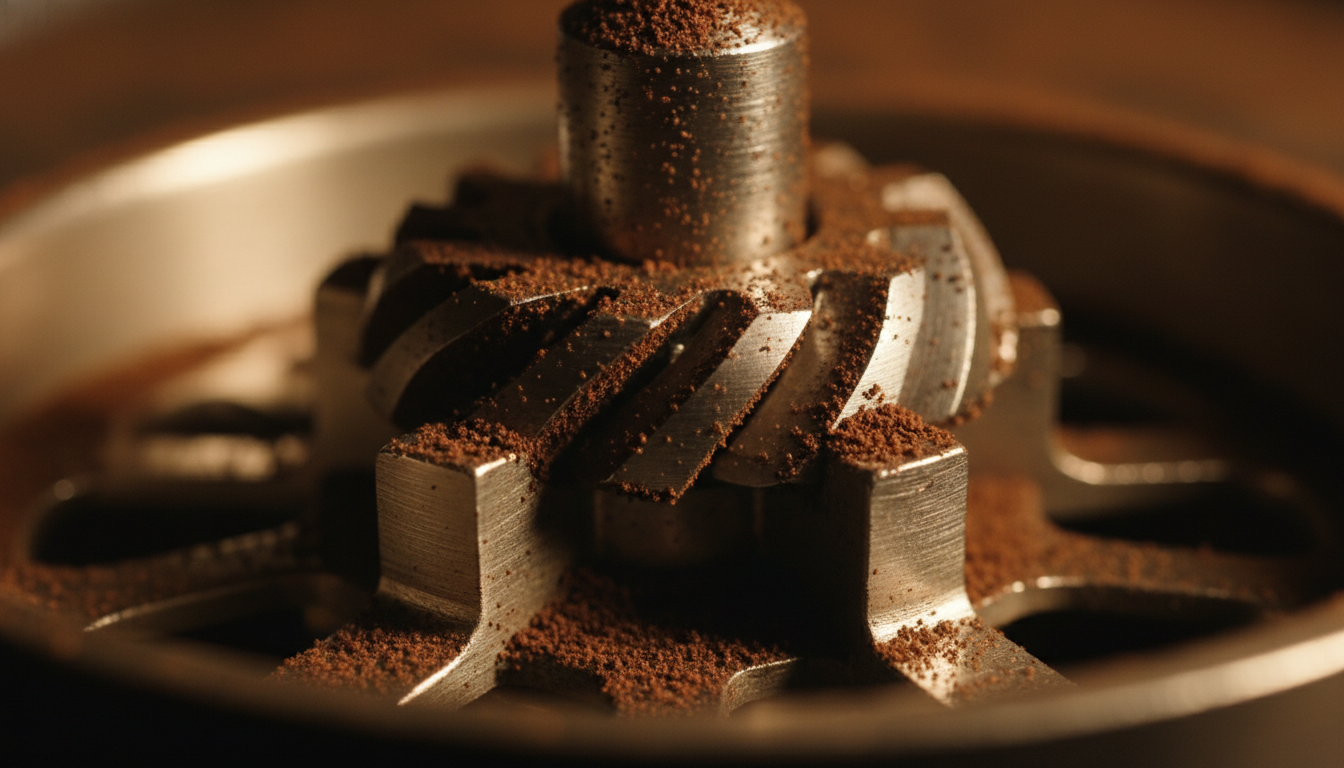
Flat burrs grind coffee beans between two parallel, flat grinding surfaces. The parallel orientation produces highly uniform particle size distribution. Uniform particles extract evenly, reducing channeling and improving shot consistency. Flat burrs excel at producing the consistency espresso requires.
Grind Profile
Flat burrs create bimodal distribution with distinct fine and coarse peaks. The fines contribute to espresso body and crema formation. The coarse particles provide flow resistance for proper extraction time. This distribution profile suits espresso's pressure-based extraction method.
Heat Generation
Flat burrs generate more heat than conical burrs due to longer bean residence time. Heat transfer affects flavor compounds in the grounds. Single-dose grinding minimizes heat buildup. Large flat burr grinders (65mm+) manage heat better than smaller models.
Flavor Characteristics
Flat burrs emphasize clarity and separation of flavor notes. The uniform extraction highlights individual origin characteristics. Flat burr espresso often displays brighter acidity and more distinct sweetness. Many professionals prefer flat burrs for single-origin espresso preparation.
Flat Burr Grind Settings Table
General Espresso Starting Points
| Grind Setting Range | Approximate Microns | Use Case | Expected Flow |
|---|---|---|---|
| Very Fine | 200-250 μm | Light roast espresso | Slow, syrupy |
| Fine | 250-300 μm | Standard espresso | Honey-like |
| Medium-Fine | 300-350 μm | Medium roast espresso | Steady stream |
| Medium | 350-400 μm | Dark roast espresso | Faster flow |
| Coarse | 400+ μm | Turkish or pressurized baskets | Fast, gushing |
Roast-Based Adjustments
- Light roasts: Require finer grinds due to bean density; start finer and adjust
- Medium roasts: Standard espresso range; most forgiving for dialing in
- Dark roasts: Require coarser grinds; oils and solubility increase extraction speed
- Bean age: Fresher beans (1-2 weeks) need slightly coarser grinds than older beans
Specific Grinder Recommendations
Popular Flat Burr Grinders
Eureka Mignon Series
Models: Specialita, Silenzio, Perfetto, Oro
Espresso range: 0-2 on the dial (Specialita: 0-5 on touch screen)
Starting point: 1.0 for medium roasts, 0.5 for light roasts
Tips: Stepless adjustment allows infinite settings between numbers. Touch screen models offer more precision with decimal displays.
Baratza Sette Series
Models: 270, 270Wi, 30
Espresso range: 3-9 on macro ring, A-I on micro (270 series)
Starting point: Macro 5, Micro E (270 series)
Tips: The Sette produces fluffy, clump-free grinds. Minimal RDT needed. Fast grinding minimizes heat retention.
DF64 / Turin / Similar
Models: DF64, Turin DF64, Solo DF64
Espresso range: 10-25 on the dial
Starting point: 15-18 for medium roasts
Tips: Single-dose design requires RDT to prevent popcorning. Consider SSP burr upgrades for espresso optimization.
Eureka Atom/Olympus
Models: Atom 60/65/75, Olympus
Espresso range: 1-3 on the dial
Starting point: 2.0 for medium roasts
Tips: Large burrs produce minimal heat. Silent operation suits early morning use. High retention requires purging.
Mazzer Mini/Super Jolly
Models: Mini Electronic, Super Jolly
Espresso range: 3-6 on the dial (varies by burr age)
Starting point: 4-5 for medium roasts
Tips: Commercial-grade build requires seasoning. High retention—purge 5g between grind changes. Very consistent once seasoned.
Adjustment Tips for Flat Burr Grinders
Maximizing Consistency
Adjustment Protocol
- Purge after adjustments: Grind 2-5g to clear old grounds from chamber
- Adjust while running: Turn grinder on, then adjust for even burr settling
- Small increments: Move 0.5-1 step at a time to avoid overshooting
- Document settings: Record grind numbers for repeatability
- Account for retention: Previous grind setting affects first few grams
RDT (Ross Droplet Technique)
Spray beans lightly with water (2-3 droplets) before grinding. RDT reduces static and eliminates clumping in flat burr grinders. Clump-free distribution improves extraction consistency. Essential for single-dose flat burr grinding.
Temperature Management
Flat burrs heat up during extended grinding sessions. Heat affects grind consistency and flavor. Allow 30-second cooling between doses if grinding multiple shots. Single-dose grinding minimizes heat issues.
Burr Maintenance
- Cleaning: Remove burrs monthly for deep cleaning
- Alignment: Check burr alignment annually; misalignment causes inconsistency
- Replacement: Replace burrs every 500-1000 lbs of coffee
- Seasoning: New burrs require 5-10 lbs of beans to reach optimal performance
Dialing Strategy
Start coarser than expected and adjust finer. Flat burrs produce less fines at coarser settings. Gradual fine-tuning prevents over-extraction. Verify grind texture by pinching grounds between fingers—should feel like fine sand.
Flat Burr vs. Conical Burr Comparison
| Characteristic | Flat Burr | Conical Burr |
|---|---|---|
| Particle Uniformity | Higher uniformity | Wider distribution |
| Fines Production | Moderate | More fines |
| Heat Generation | Higher | Lower |
| Flavor Clarity | Higher clarity | More body/mouthfeel |
| Retention | Higher (varies by model) | Lower |
| Noise Level | Quieter (varies by model) | Louder |
| Best For | Single-origin, clarity | Blends, traditional espresso |
Related Guides
Espresso Grind for Conical Burr Grinder
Compare conical burr settings and characteristics.
Quick Espresso Dialing In Guide
Fast method for dialing in with flat burr grinders.
Espresso Dialing In Troubleshooting
Fix extraction issues regardless of grinder type.
Espresso Channeling Prevention
Maximize flat burr consistency with proper distribution.
Over-Extraction Flavor Profile
Identify when grind is too fine.
Under-Extraction Flavor Profile
Recognize when grind is too coarse.
Key Takeaways
- → Flat burrs excel at uniformity: Parallel grinding surfaces produce consistent particle size for even extraction.
- → Starting points vary by grinder: Reference model-specific recommendations rather than generic settings.
- → Purge after adjustments: Clear old grounds before pulling test shots for accurate results.
- → Use RDT for clump-free grinding: Water spray eliminates static and improves distribution.
- → Light roasts need finer settings: Bean density affects optimal grind size significantly.