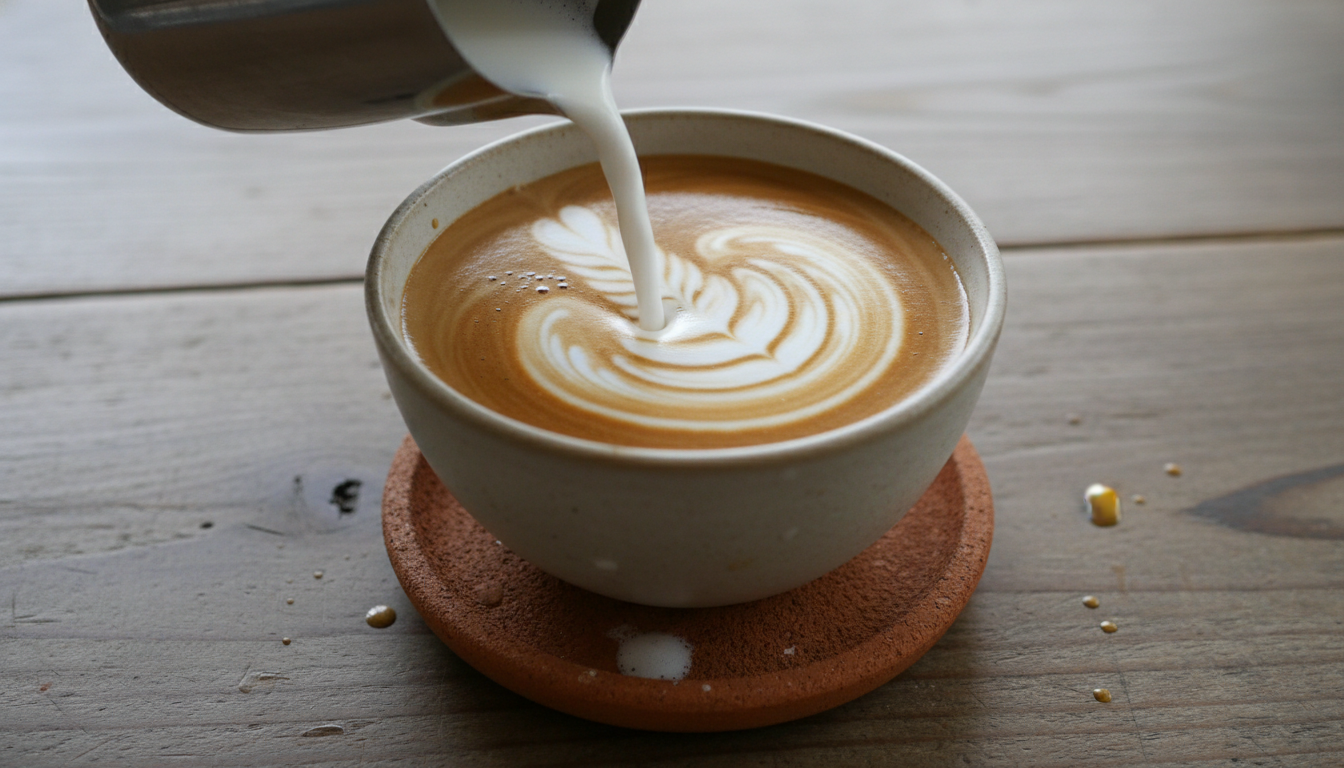
Flat White vs Latte Quick Answer
Flat white: 2 shots espresso + 4 oz steamed milk with microfoam (stronger coffee taste). Latte: 1-2 shots + 8-10 oz milk with more foam (milkier taste). Both use espresso and steamed milk but differ in ratio and foam level.
The flat white and latte are two of the most popular espresso-based milk drinks, yet many home baristas struggle to understand what truly sets them apart. While both combine espresso with steamed milk, the differences in proportions, milk texture, and cup size create distinctly different drinking experiences. Understanding these nuances allows you to make each drink correctly and choose the one that matches your taste preferences.
This guide provides a comprehensive comparison of flat white versus latte preparation, including detailed recipes, milk steaming techniques, and practical tips for achieving café-quality results at home. Whether you prefer the bold, coffee-forward character of a flat white or the creamy, milk-forward profile of a latte, you'll learn exactly how to make each drink to perfection.
Core Definition: What Distinguishes Each Drink
Flat White
Originating from Australia and New Zealand in the 1980s, the flat white was developed as a response to cappuccinos that had become too foam-heavy. The name "flat" refers to the minimal foam layer compared to other milk drinks.
A flat white emphasizes the espresso's flavor profile while adding a velvety, creamy texture through microfoam milk. The drink is characterized by its higher coffee-to-milk ratio and the seamless integration of milk with espresso.
Latte
The caffè latte, meaning "milk coffee" in Italian, has been a staple of Italian breakfast culture for generations. The drink gained international popularity through American coffee culture, where larger sizes and more milk became standard.
A latte prioritizes milk as the dominant component, creating a milder, creamier beverage where espresso provides flavoring rather than dominance. The higher milk content makes lattes popular for flavored syrups and latte art.
Key Differences: Ratio, Milk Texture, Cup Size, Origin
| Feature | Flat White | Latte |
|---|---|---|
| Espresso Shots | 2 shots (2 oz / 60ml) | 1-2 shots (1-2 oz / 30-60ml) |
| Milk Amount | 4 oz (120ml) | 8-10 oz (240-300ml) |
| Total Volume | 5-6 oz (150-180ml) | 10-12 oz (300-360ml) |
| Foam Thickness | 1/4 inch (6mm) microfoam | 1/2 inch (12mm) foam |
| Espresso-to-Milk Ratio | 1:2 to 1:2.5 | 1:3 to 1:5 |
| Cup Size | 5-6 oz ceramic | 10-12 oz glass or ceramic |
| Origin | Australia/New Zealand (1980s) | Italy (traditional caffè latte) |
| Flavor Profile | Coffee-forward, balanced | Milk-forward, mild |
Key Takeaway
The flat white uses approximately half the milk of a latte while maintaining the same espresso content, resulting in a stronger coffee flavor. The flat white's microfoam also integrates more completely with the espresso, while latte foam sits more distinctly on top.
How to Make a Flat White
Flat White Specifications
- Espresso: Double shot (2 oz / 60 ml)
- Milk: 4 oz (120 ml) steamed to microfoam
- Cup: 5-6 oz ceramic (preheated)
- Milk temperature: 150-155°F (65-68°C)
- Foam layer: 1/4 inch (6mm) velvety microfoam
Step 1: Prepare Your Equipment
- • Preheat a 5-6 oz ceramic cup with hot water
- • Grind 18-20g of coffee for a double espresso shot
- • Fill milk pitcher with 4-5 oz cold whole milk
- • Purge steam wand to remove condensation
Step 2: Extract the Espresso
- • Distribute and tamp grounds evenly with 30 lbs pressure
- • Lock portafilter and start extraction immediately
- • Target 25-30 second extraction time
- • Yield: 2 oz (60ml) with rich crema
- • Empty preheated cup and pour espresso directly in
Step 3: Steam the Milk
- • Position steam wand tip just below milk surface
- • Open steam fully and introduce air for 5-7 seconds (hissing sound)
- • Submerge wand and create whirlpool to heat milk
- • Stop when pitcher is too hot to hold (150-155°F)
- • Tap pitcher and swirl to remove large bubbles
Step 4: Pour and Serve
- • Pour milk from 2-3 inches above cup
- • Start with steady stream in center of espresso
- • Lower pitcher as cup fills to create latte art
- • Finish with thin microfoam layer (1/4 inch)
- • Serve immediately at 140-150°F
How to Make a Latte
Latte Specifications
- Espresso: 1-2 shots (1-2 oz / 30-60 ml)
- Milk: 8-10 oz (240-300 ml) steamed
- Cup: 10-12 oz glass or ceramic (preheated)
- Milk temperature: 150-155°F (65-68°C)
- Foam layer: 1/2 inch (12mm) foam
Step 1: Prepare Your Equipment
- • Preheat a 10-12 oz cup or glass with hot water
- • Grind 9-10g (single) or 18-20g (double) for espresso
- • Fill milk pitcher with 10-12 oz cold whole milk
- • Ensure steam wand is purged and ready
Step 2: Extract the Espresso
- • Distribute and tamp grounds evenly
- • Lock portafilter and begin extraction
- • Target 25-30 second extraction
- • Single shot: 1 oz (30ml) | Double shot: 2 oz (60ml)
- • Pour espresso into preheated cup
Step 3: Steam the Milk
- • Position steam wand slightly deeper than for flat white
- • Introduce air for 8-10 seconds (longer than flat white)
- • Submerge wand and heat milk with whirlpool motion
- • Target 150-155°F internal temperature
- • Result should be foamier with more volume
Step 4: Pour and Serve
- • Pour milk slowly into espresso
- • Hold back foam initially with spoon if needed
- • Add foam layer on top (1/2 inch)
- • Optional: Create latte art in foam layer
- • Serve immediately
Milk Steaming for Each: Microfoam vs Foamier Texture
Milk steaming technique is where flat whites and lattes diverge most significantly. Understanding the differences in texture, temperature, and technique ensures you achieve the characteristic mouthfeel of each drink.
Flat White Microfoam
Flat whites require microfoam—milk steamed to create microscopic bubbles that create a glossy, paint-like texture. The foam integrates completely with the milk rather than separating.
- • Air incorporation: 5-7 seconds
- • Wand position: Just below surface
- • Bubble size: Microscopic, barely visible
- • Texture: Velvety, glossy, pourable
- • Volume increase: 20-30%
Latte Foam
Lattes use a foamier, airier texture with larger bubbles that create a distinct layer on top of the drink. This foam holds latte art well and provides a different mouthfeel.
- • Air incorporation: 8-10 seconds
- • Wand position: Slightly deeper
- • Bubble size: Small but visible
- • Texture: Airy, foamy, pillowy
- • Volume increase: 40-50%
Pro Tips for Both Drinks
- • Use whole milk (3.5-4% fat) for best results—fat creates stable foam structure
- • Start with cold milk (40°F or below) to maximize steaming time
- • Never exceed 160°F—higher temperatures scald milk and destroy proteins
- • Purge steam wand before and after each use to prevent buildup
- • Tap and swirl the pitcher after steaming to integrate foam and remove large bubbles
Presentation: Traditional Serving Styles
Flat White Presentation
Flat whites are traditionally served in small, wide ceramic cups (5-6 oz) that showcase the drink's proportions and help retain heat.
- • Vessel: 5-6 oz ceramic cup, often wide and shallow
- • Color: Mottled brown surface with minimal white
- • Art: Simple pour patterns; microfoam integrates quickly
- • Temperature: Served at 140-150°F for immediate drinking
- • Garnish: None traditional; some add latte art
Latte Presentation
Lattes are served in larger vessels (10-12 oz) and often showcase elaborate latte art due to the thicker foam layer and larger surface area.
- • Vessel: 10-12 oz ceramic cup or clear glass
- • Color: Distinct layers visible in glass; foam cap on top
- • Art: Rosetta, heart, tulip, or complex free-pour patterns
- • Temperature: Served at 140-150°F
- • Garnish: Optional cocoa powder, cinnamon, or flavored syrup
Choosing Between Them: Preference for Coffee-Forward vs Milk-Forward
Selecting between a flat white and latte depends entirely on your personal taste preferences and the drinking experience you seek. Here's how to decide:
Choose a Flat White If You:
- • Prefer the taste of espresso to shine through
- • Enjoy balanced, not-too-milky coffee drinks
- • Want a stronger caffeine kick per ounce
- • Appreciate velvety, integrated texture
- • Prefer smaller, more concentrated servings
- • Want to taste the nuances of your coffee beans
- • Enjoy the traditional Australasian coffee culture
Choose a Latte If You:
- • Prefer milder, creamier coffee flavor
- • Enjoy a longer, more leisurely drinking experience
- • Like adding flavored syrups (vanilla, caramel, etc.)
- • Appreciate elaborate latte art
- • Want a more filling, substantial drink
- • Are sensitive to strong coffee flavors
- • Prefer the Italian/American coffee tradition
Time-of-Day Considerations
Many coffee enthusiasts prefer flat whites in the morning when seeking a stronger coffee experience, and lattes in the afternoon for a more relaxed, indulgent treat. However, personal preference always takes precedence—there are no hard rules in home coffee making.
Learn More Coffee Techniques
Related Guides
How to Make a Flat White
Detailed recipe and technique guide for perfect flat whites.
How to Make a Cappuccino
Learn the third classic milk drink with its signature foam.
Latte Art Guide
Step-by-step instructions for pouring hearts, rosettas, and tulips.
Milk Steaming Guide
Comprehensive techniques for all milk types and drinks.
Key Takeaways
- → Ratio is everything: Flat whites use 4 oz milk to 2 oz espresso; lattes use 8-10 oz milk.
- → Texture distinguishes them: Flat whites feature integrated microfoam; lattes have distinct foam layers.
- → Size matters: Flat whites are 5-6 oz; lattes are 10-12 oz.
- → Flavor profiles differ: Flat whites are coffee-forward; lattes are milk-forward.
- → Both require practice: Mastering milk steaming is key to both drinks.